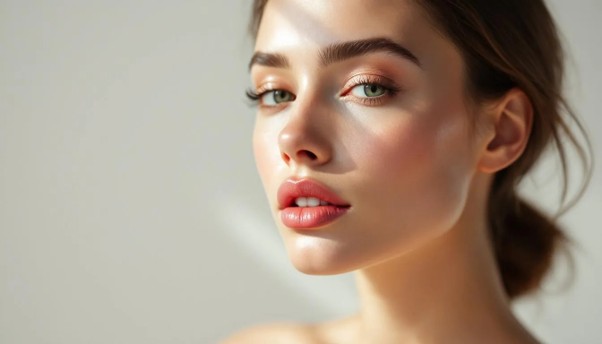
How artificial intelligence is reshaping our relationship with beauty—and what it means for women’s mental health
Every morning, millions of women reach for their phones and are immediately confronted with an endless stream of flawless faces. Smooth, poreless skin. Perfectly symmetrical features. Bodies that seem to defy both gravity and genetics. But increasingly, what we’re seeing isn’t entirely human—it’s been enhanced, altered, or even wholly generated by artificial intelligence. And according to emerging research, this technological shift may be intensifying beauty standards in ways we’re only beginning to understand.
The New Face of Perfection
Dr Renee Engeln, a psychology professor who has spent decades studying women’s body image, notes that we’ve entered uncharted territory. “Previous generations compared themselves to airbrushed magazine models,” she explains in her recent work. “Today’s women are comparing themselves to AI-enhanced versions of reality that are literally impossible to achieve.”
The figures tell a sobering story. A 2024 study published in the *Journal of Social and Clinical Psychology* found that women who spent more than three hours daily on social media platforms featuring AI-filtered content reported significantly higher levels of body dissatisfaction compared to those with limited exposure. The research, which surveyed over 2,000 women aged 18-45, revealed that 73% couldn’t reliably identify which images had been AI-enhanced—meaning they were setting impossible standards without even realising it.
When Filters Become the Default
The rise of AI-powered beauty filters has dramatically transformed how we present ourselves online. What began as playful augmented reality features has developed into advanced technology that can reshape facial structures, smooth skin to an extraordinary degree, and modify body proportions in real-time video.
Dr Phillippa Diedrichs, whose research at the Centre for Appearance Research has been instrumental in understanding body image concerns, points out a troubling trend: “We’re seeing women who can no longer recognise their own unfiltered faces as ‘normal.’ They’ve become so accustomed to their AI-enhanced appearance that their actual reflection causes distress.”
This phenomenon, sometimes called “Snapchat dysmorphia” or “filter dysmorphia,” has led to a documented rise in women seeking cosmetic procedures to resemble their filtered images. A 2023 survey by the International Society of Aesthetic Plastic Surgery found that 58% of practitioners reported consultations where patients presented filtered photos as their desired result—up from just 13% in 2019.
The Invisible Hand of AI
What makes AI-driven beauty standards particularly insidious is their invisibility. Unlike traditional photo editing, which often leaves telltale signs, modern AI can create “perfect” images that our brains process as real, seamlessly. These algorithms are trained on thousands of faces deemed conventionally attractive, then generate or enhance pictures that represent an averaged, idealised version of beauty—one that no individual human actually possesses.
Research from the University of Amsterdam, published in *Computers in Human Behaviour* (2024), demonstrated that participants shown AI-generated faces rated them as more attractive than real human faces, yet also reported feeling worse about their own appearance afterwards. The study’s lead author noted that “AI is essentially creating a new species of beauty—one that’s optimised for visual appeal but divorced from human reality.”
The Algorithmic Echo Chamber
Social media algorithms compound the problem by learning what keeps us engaged—and serving us more of it. If you pause on images of a particular body type or facial feature, the algorithm interprets this as a preference and floods your feed with similar content. This creates what researchers call “beauty echo chambers,” where women are repeatedly exposed to increasingly narrow beauty ideals.
A longitudinal study tracking 1,500 women over 18 months found that algorithmic content curation led to progressively more homogeneous beauty standards in participants’ feeds, correlating with increased anxiety about appearance and decreased self-esteem scores on validated psychological measures.
The Mental Health Toll
The psychological effects of AI-influenced beauty standards go beyond mere dissatisfaction. Clinical psychologists report rises in anxiety, depression, and eating disorders associated with social media use and AI-filtered content.
Dr Charlotte Markey, whose research focuses on body image and eating behaviours, emphasises the link: “When young women are constantly exposed to unattainable standards, it doesn’t just make them feel bad about their appearance—it can trigger serious mental health conditions. We’re seeing this in our clinics with increasing frequency.”
A 2024 meta-analysis of 47 studies across 12 countries found a significant link between exposure to AI-enhanced imagery and symptoms of body dysmorphic disorder, especially among women aged 16-30. The strongest effect was observed in those reporting high social media use and limited media literacy about AI manipulation.
Fighting Back: Strategies for a Healthier Relationship with Beauty
Despite these challenges, researchers and mental health professionals are developing evidence-based strategies to help women navigate this new landscape:
**Cultivate media literacy.** Learning to identify AI enhancement and understanding how algorithms work can reduce their psychological impact. Studies show that women who receive training in digital literacy report less comparison and greater body satisfaction.
**Curate your feed consciously.** Actively follow accounts that showcase diverse, unfiltered bodies and faces. Research confirms that exposure to body-positive content can buffer against the adverse effects of idealised imagery.
**Practice self-compassion.** Dr Kristin Neff’s research demonstrates that self-compassion—treating yourself with the same kindness you’d offer a friend—significantly reduces the impact of appearance-based social comparison.
**Limit exposure.** Setting boundaries around social media use isn’t about avoidance; it’s about protection. Even reducing daily use by 30 minutes has been shown to improve body image and mood.
**Seek real-world connection.** Spending time with real people, in real bodies, helps recalibrate our sense of normal. Face-to-face interaction provides a crucial counterbalance to the distorted online world.
Looking Forward
As AI technology continues to evolve, so too must our approach to beauty standards and mental health. Some countries are beginning to require disclosure when images have been significantly altered, and there’s growing pressure on social media platforms to provide better tools for identifying AI-generated or enhanced content.
But ultimately, the solution isn’t just technological—it’s cultural. We need broader conversations about what beauty means, who defines it, and whether the pursuit of physical perfection is worth the psychological cost.
The face staring back at you from the mirror is real, imperfect, and uniquely yours. In a world of artificial perfection, that authenticity is becoming the most radical—and beautiful—choice of all.
—
*If you’re struggling with body image concerns or disordered eating, please reach out to a mental health professional. These feelings are valid, common, and treatable.*